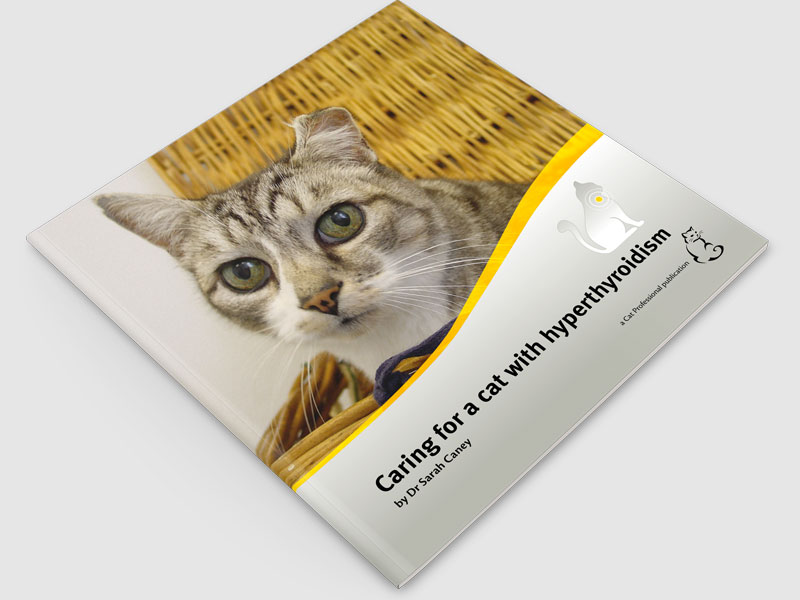
Caring for a cat with hyperthyroidism (download only)
£8.99
This limited edition is proudly sponsored by Norbrook® Laboratories Limited, manufacturers of THYRONORM® Oral Solution for Cats. Please note that this edition is only available as a Download.
An 88 page fully illustrated book aimed at cat owners and veterinary professionals, updated July 2016.
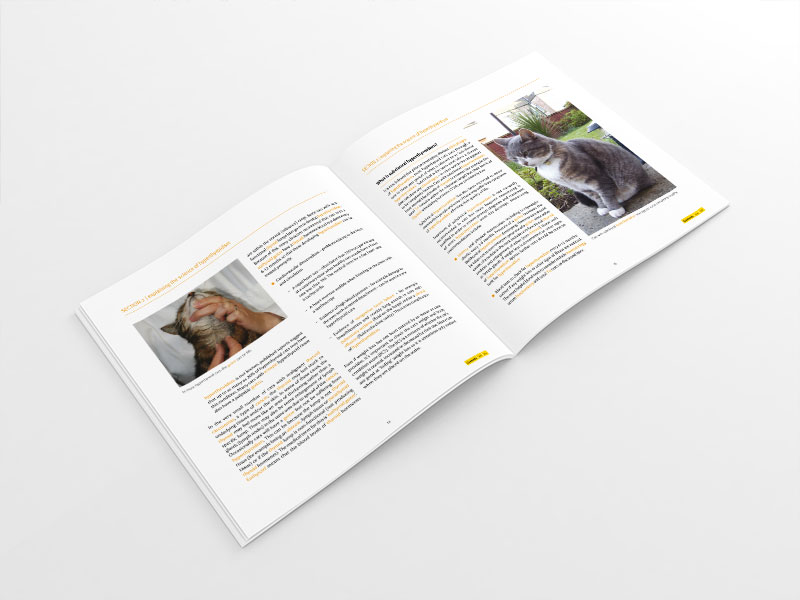
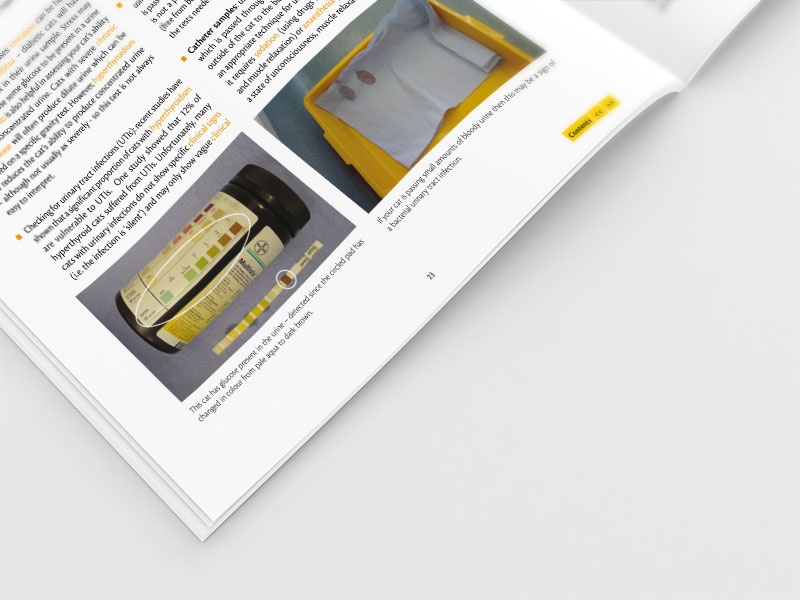
Hyperthyroidism is one of the most common cat illnesses and most often affects elderly cats. Caring for a cat with hyperthyroidism has been written as an information source and support tool primarily aimed at owners whose cats have been diagnosed with hyperthyroidism. It is designed to be the perfect resource for cat owners but is a useful tool for vet students, veterinary nurses and technicians. The book explains what hyperthyroidism is, how it is diagnosed and what the various treatment options are. The emotional as well as the medical aspects of coping with a cat with hyperthyroidism are discussed with a lot of practical advice on all aspects of care. Caring for a cat with hyperthyroidism contains a detailed glossary of terms commonly used by vets and several case reports illustrating how successful treatment can be.
The newly revised third edition contains more information on testing for hyperthyroidism, subclinical hyperthyroidism (what this is and how to diagnose it), the importance of hypothyroidism, monitoring your cat's bodyweight at home and use of newer treatment options such as THYRONORM®, a liquid antithyroid medication.
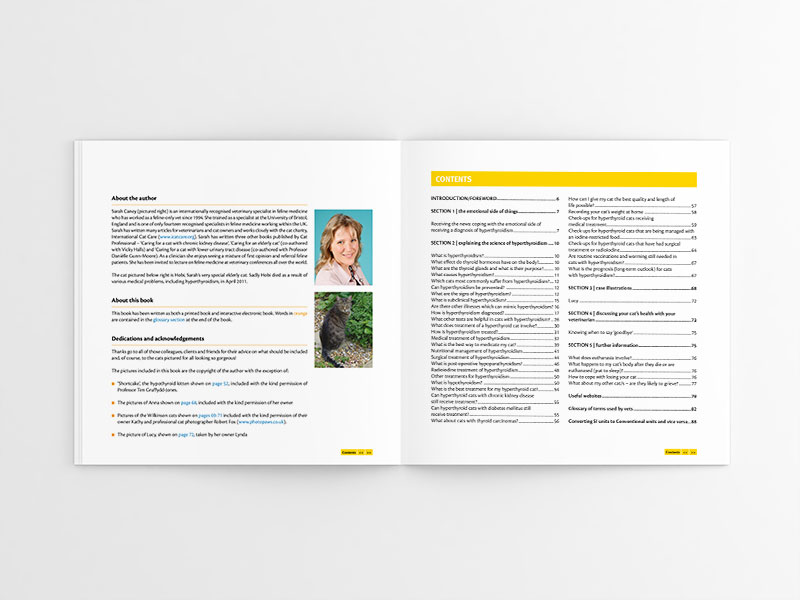
INTRODUCTION/FOREWORD
SECTION 1 | the emotional side of things
Receiving the news: coping with the emotional side of receiving a diagnosis of hyperthyroidism
SECTION 2 | explaining the science of hyperthyroidism
What is hyperthyroidism?
What effect do thyroid hormones have on the body?
What is the thyroid gland and what does a healthy thyroid gland do?
What causes hyperthyroidism?
Which cats most commonly suffer from hyperthyroidism?
Can hyperthyroidism be prevented?
What are the signs of hyperthyroidism?
What is subclinical hyperthyroidism?
Are there other illnesses which can mimic hyperthyroidism?
How is hyperthyroidism diagnosed?
What other tests are helpful in cats with hyperthyroidism?
What does treatment of a hyperthyroid cat involve?
How is hyperthyroidism treated?
Medical treatment of hyperthyroidism
What is the best way to medicate my cat?
Nutritional management of hyperthyroidism
Surgical treatment of hyperthyroidism
What is post-operative hypoparathyroidism?
Radioiodine treatment of hyperthyroidism
Other treatments for hyperthyroidism
What is hypothyroidism?
What is the best treatment for my hyperthyroid cat?
Can hyperthyroid cats with chronic kidney disease still receive treatment?
Can hyperthyroid cats with diabetes mellitus still receive treatment?
What about cats with thyroid carcinomas?
How can I give my cat the best quality and length of life possible?
Check-ups for hyperthyroid cats receiving medical treatment
Check-ups for hyperthyroid cats that are being managed with an iodine-restricted food
Check-ups for hyperthyroid cats that have had surgical treatment or radioiodine
Are routine vaccinations and worming still needed in cats with hyperthyroidism?
What is the prognosis (long-term outlook) for cats with hyperthyroidism?
SECTION 3 | case illustrations
SECTION 4 | discussing your cat’s health with your veterinarian
Knowing when to say ‘goodbye’
SECTION 5 | further information
What does euthanasia involve?
What happens to my cat’s body after they die or are euthanased (put to sleep)?
How to cope with losing your cat
What about my other cat/s – are they likely to grieve?
Useful websites
Glossary of terms used by vets
Converting SI units to Conventional units and vice versa
Sarah qualified as a veterinarian in 1993 and has worked as a feline-only clinician for more than twenty years. Sarah has authored and co-authored a number of other Vet Professionals publications including ‘Caring for a cat with chronic kidney disease, ‘Caring for a cat with lower urinary tract disease’ and ‘Caring for an elderly cat’. Sarah currently lives in Scotland with her family (including one cat, Sooty) and enjoys seeing both first opinion and referral feline patients. Sarah’s detailed biography can be found here.
Review, Cat Owner
I would like to take this opportunity to add that I am an avid reader of your ‘Caring for a cat-‘ series. These books have been of huge benefit to me and my super senior cat Rufus, none more so than your book on hyperthyroidism following his diagnosis last year. Trying to remember everything you are told in the consulting room when you receive the initial diagnosis is not always easy so having a book on hand to refer to at any time is invaluable. Learning about the advantages or disadvantages of the various treatment options my husband and I were able to make a well informed decision.
Professor Richard Malik, DVSc DipVetAn MVetClinStud PhD FACVSc FASM, Valentine Charlton Feline Specialist, University of Sydney, Australia
Sarah Caney has produced another fantastic book to help cat owners – this time, for the clients whose cat has been recently diagnosed with hyperthyroidism. The book is written in gentle flowing prose, with information that is almost at the veterinary level in terms of depth of understanding.
The information is explained so clearly and expressed so simply that it is within the grasp of the average owner. Sarah explains the pathophysiology of the disease, why cats get clinical signs, and the chronology and progression of the condition. Importantly, she goes through all the different treatment options that are available, discussing the pros and cons of each alternative. This will help enormously – as there really is quiet a choice and the reasons why a vet may recommend one treatment over another can be difficult for a client to perceive. Many vets will take the opportunity of giving this text to owners with recently diagnosed hyperthyroidism, to help them play a more active role in deciding the treatment options for their cat. I cannot recommend this book too highly – owners will get a lot out of it, nurses will learn quite a bit, and even experienced feline clinicians will find out some new ways of thinking about how to treat different individual patients.
Andrea Harvey, FAB Clinical Fellow in Feline Medicine, University of Bristol, UK
A brilliantly written book, very well thought through and extremely thorough yet written in a way that owners will easily understand. This book will answer any query that an owner has about hyperthyroidism and greatly deepen owner understanding of the condition. A definite must for any practice that sees feline patients, and highly recommended for any owner of a hyperthyroid cat.
Kathy Wilkinson, UK Cat Owner
Having read Sarah’s book all I can say is how lucky the owner of a newly diagnosed hyperthyroid cat would be to have access to it. I would have given my eye teeth to have had a book like this to read when my first cat was diagnosed, and even though I have learnt quite a lot since (with my little hyperthyroid gang of six), this has made much of what I thought I understood so much clearer. It would have saved me many sleepless nights over the last few years.
This book is a must for every vet’s surgery and I will be nagging my practice to get a copy. In fact, I think I will provide them with one as I think it is an absolute necessity.
Vet Professionals publications are all authored by veterinary professionals who have specialised in their field of expertise. Veterinary specialisation typically involves several years of additional study and examinations. In the field of feline medicine, there are currently only 13 UK-recognised Specialists. View a list of current UK-recognised Specialists (all disciplines).


