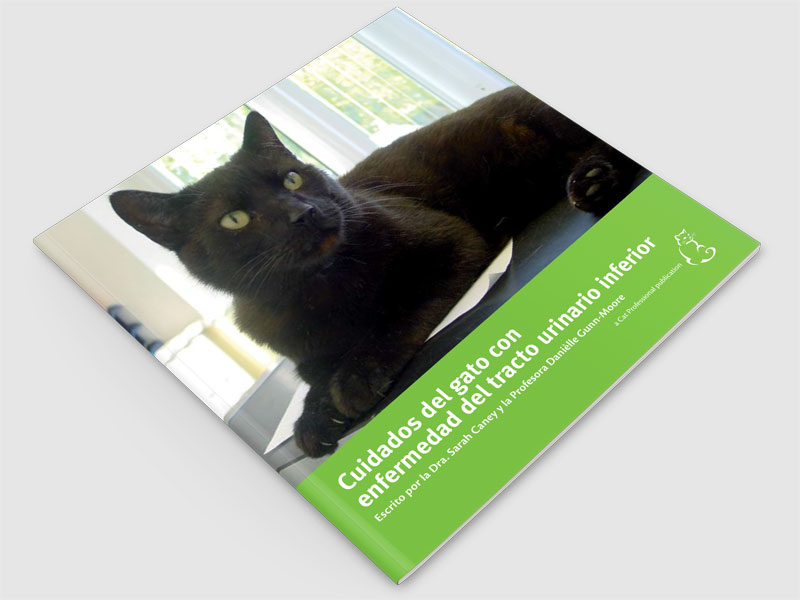
Cuidados del gato con enfermedad del tracto urinario inferior

Dr Sarah Caney, Danièlle Gunn-Moore

Price range: £11.50 through £12.99

‘Caring for a cat with lower urinary tract disease’ has been written as the best information source and source of support for owners of cats who have been diagnosed with lower urinary tract disease. In Spanish.

ISBN No: 978-0-9556913-7-9

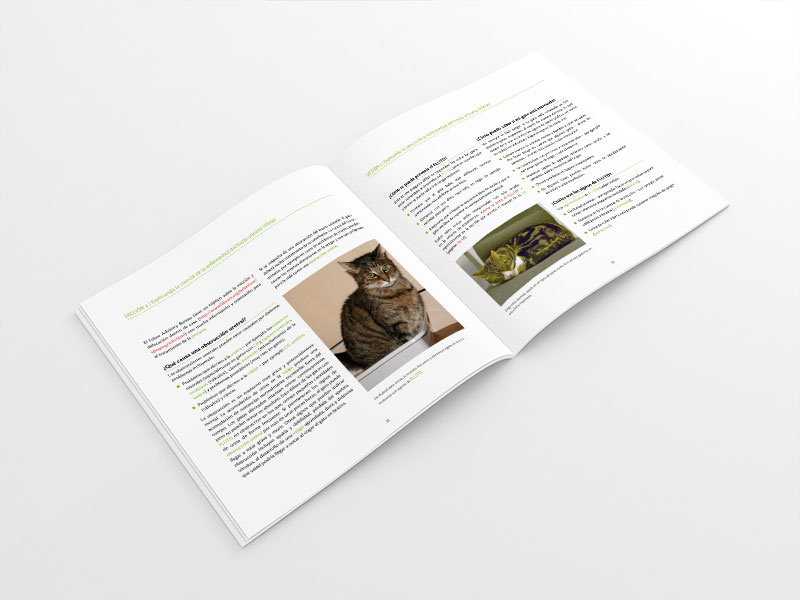
A 68 page, fully illustrated book aimed at cat owners and veterinary professionals. In Spanish.

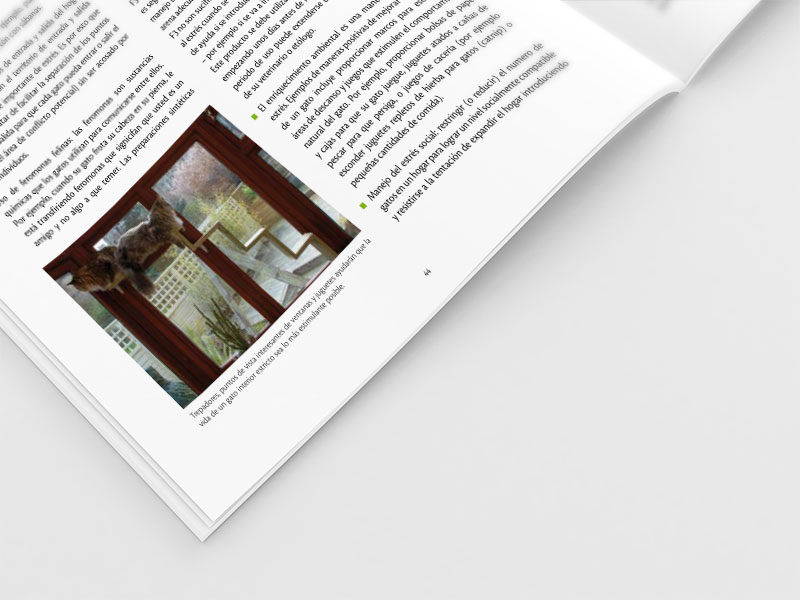
'Caring for a cat with lower urinary tract disease' has been written as the best information source and source of support for owners of cats who have been diagnosed with lower urinary tract disease. 'Caring for a cat with lower urinary tract disease' is designed to explain what causes lower urinary tract disease, how this is diagnosed and treated, and how future relapses can be prevented. 'Caring for a cat with lower urinary tract disease' can also be an excellent resource for student vets, veterinary nurses and technicians. The book deals with the emotional aspects of coping with a cat with lower urinary tract disease and there is practical advice on all aspects of cat care and welfare. The book contains a case report taking the reader through a case from initial signs and illustrating successful management and There is also a detailed glossary of terms which may be used by your vet.

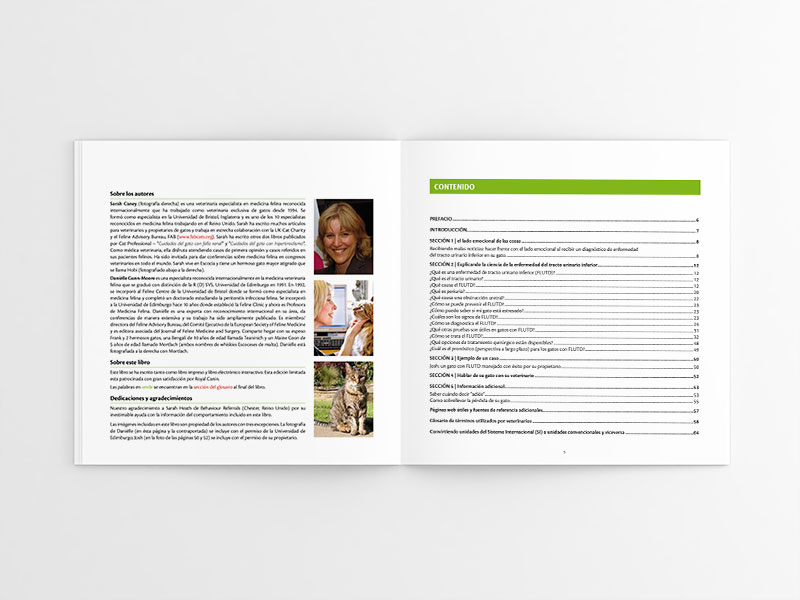
PREFACIO
INTRODUCCIÓN
SECCIÓN 1 | el lado emocional de las cosas

Recibiendo malas noticias: hacer frente con el lado emocional al recibir un diagnóstico de enfermedad
del tracto urinario inferior en su gato

SECCIÓN 2 | Explicando la ciencia de la enfermedad del tracto urinario inferior

¿Qué es una enfermedad de tracto urinario inferior (FLUTD)?
¿Qué es el tracto urinario?
¿Qué causa el FLUTD?
¿Qué es periuria?
¿Qué causa una obstrucción uretral?
¿Cómo se puede prevenir el FLUTD?
¿Cómo puedo saber si mi gato está estresado?
¿Cuáles son los signos de FLUTD?
¿Cómo se diagnostica el FLUTD?
¿Qué otras pruebas son útiles en gatos con FLUTD?
¿Cómo se trata el FLUTD?
¿Qué opciones de tratamiento quirúrgico están disponibles?
¿Cuál es el pronóstico (perspectiva a largo plazo) para los gatos con FLUTD?

SECCIÓN 3 | Ejemplo de un caso

Josh: un gato con FLUTD manejado con éxito por su propietario

SECCIÓN 4 | Hablar de su gato con su veterinario
SECCIÓN 5 | Información adicional

Saber cuándo decir “adiós”
Como sobrellevar la pérdida de su gato
Páginas web útiles y fuentes de referencia adicionales
Glosario de términos utilizados por veterinarios
Convirtiendo unidades del Sistema Internacional (SI) a unidades convencionales y viceversa

Sarah qualified as a veterinarian in 1993 and has worked as a feline-only clinician for more than twenty years. Sarah has authored and co-authored a number of other Vet Professionals publications including ‘Caring for a cat with chronic kidney disease, ‘Caring for a cat with hyperthyroidism’ and ‘Caring for an elderly cat’. Sarah currently lives in Scotland with her family (including one cat, Sooty) and enjoys seeing both first opinion and referral feline patients. 

Danièlle qualified as a veterinarian in 1991 and, like Sarah, has worked as a feline-only clinician for more than twenty years. Danièlle has written a large number of papers for scientific journals including several related to feline lower urinary tract disease, one of Danièlle’s research areas. Danièlle currently lives in Scotland with her husband and Maine Coon cat, Mortlach.

Vicky Halls, Member of the Association of Pet Behaviour Counsellors and author of ‘Cat Confidential’, ‘Cat Detective’, ‘Cat Counsellor’ and ‘The Complete Cat’
“Caring for a cat with urinary tract disease” is a comprehensive guide that covers signs, symptoms, diagnostic tests, treatment, management and prevention of lower urinary tract disease.

Complicated veterinary procedures are discussed but the language is very accessible and an easy-to-follow glossary of terminology enables owners with no medical knowledge to understand the condition. The depth of the information makes it equally useful for veterinary nurses, cattery staff, breeders and re-homing charities.

This book also emphasises the need for practical lifestyle changes at home to manage FLUTD and gives excellent advice on subjects such as reducing stress in a multi-cat household and encouraging cats to drink.

FLUTD is a complicated subject for owners to fully appreciate so it is wonderful, at last, to have one book that contains all the necessary information that can be recommended to everyone!

Review, ‘UK Vet: The Journal for the Veterinary Surgeon in General Practice’ (Volume 14 No.4, May 2009)
Dr Sarah Caney and Professor Danielle Gunn-Moore have written a book that could literally be life changing for cat owners… there are many practical tips that make life with an affected cat much easier and it is worth having a book in every practice, cattery or rescue centre for this reason alone.

Review, M, UK cat owner
I found it very helpful. A lot I have been told by my vet but having it in print was better as there is only so much you can take in when the vet is explaining things to you, especially when you are stressed and panicking. There were some good tips, too about feeding and stress reduction.

Review, ‘Your Cat’ (Britain’s best selling cat magazine) – August 2009
I can’t recommend anything better than getting hold of a booklet by two of the top experts in this country, Caring for a cat with lower urinary tract disease by Dr Sarah Caney and Professor Danielle Gunn-Moore It offers a great explanation of a complex condition.

Jonnie, owner of Shai
Whenever someone shares the news of a blocked cat I refer them to the Vet Professionals website and book ‘Caring for a cat with lower urinary tract disease’ (which I believe should be handed to every cat owner on diagnosis of FLUTD). Thanks to the book and my very dedicated local vet, I have been able to give my cat Shai a happier and more healthy life. Being able to home-manage him has saved us all much stress. Thanks again for helping me to give my four legged family member an all around better life.

Vet Professionals publications are all authored by veterinary professionals who have specialised in their field of expertise. Veterinary specialisation typically involves several years of additional study and examinations. In the field of feline medicine, there are currently only 13 UK-recognised Specialists. View a list of current UK-recognised Specialists (all disciplines).